Meta''s $21 Billion Bet: Why Renting GPUs Is the New AI Infrastructure Strategy
In April 2026, Meta committed a staggering $21 billion to CoreWeave in a

Meta's $21 Billion Bet: Why Renting GPUs Is the New AI Infrastructure Strategy

Beyond the Headline: Decoding a $21 Billion Infrastructure Pivot
On April 9, 2026, a definitive shift in the architecture of artificial intelligence infrastructure was recorded. Meta Platforms, Inc. formalized a long-term contract committing $21 billion to the specialized cloud provider CoreWeave for GPU rental capacity (Source 1: [Primary Data]). This transaction transcends the scale of a mere procurement deal. It represents a fundamental strategic pivot from a predominantly owned-and-operated model to a hybrid approach that integrates massive rented capacity. The underlying logic is an economic recalibration driven by the exponential scaling of AI models. Where capital expenditure (CapEx) on owned data centers offers control, the operational expenditure (OpEx) model of renting provides critical agility. The $21 billion commitment is a calculated bet that the flexibility and scalability of rented infrastructure now outweigh the traditional benefits of full ownership for a significant portion of AI workload lifecycles.
The Rise of the Specialized Cloud: Why CoreWeave, Not AWS or Azure?
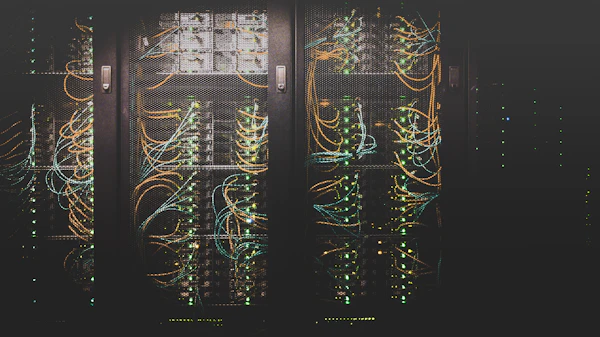
Meta’s selection of CoreWeave, rather than a general-purpose hyperscaler like Amazon Web Services or Microsoft Azure, is a critical component of the strategy. CoreWeave’s operational niche is the provisioning of high-performance, GPU-accelerated infrastructure optimized for machine learning training and inference. This contrasts with the broader, more generalized service stacks of the largest cloud providers. The specialization argument centers on performance, software environment tailoring, and agility. A provider singularly focused on GPU workloads can optimize its entire stack—from networking and cooling to scheduling software—for maximum throughput and efficiency for AI tasks. Industry analyses prior to this deal had documented the rapid growth of such specialized GPU cloud providers, indicating a credible and maturing market segment. Meta’s move validates this trend at the highest level of enterprise adoption, suggesting that for frontier AI development, specialized performance can trump the integrated ecosystem benefits of a general-purpose cloud.

The Hidden Supply Chain Calculus: Buffering Against GPU Scarcity
Beneath the operational flexibility lies a deeper, strategic layer: supply chain insulation. The multi-year, multi-billion-dollar contract functions as a sophisticated form of supply chain insurance. By securing a guaranteed pipeline of GPU capacity from CoreWeave—which itself holds large, forward-purchased allocations from chipmakers—Meta buffers itself against future scarcity, allocation battles, and pricing volatility in the semiconductor market. This long-term commitment locks in capacity and predictable costs, de-risking the execution of its multi-year AI roadmap. This dynamic introduces a new power node in the AI hardware value chain. While chipmakers like Nvidia retain technological dominance, large-scale rental aggregators like CoreWeave become critical capacity gatekeepers. Their ability to secure supply and offer it as a scalable service to clients like Meta positions them as powerful intermediaries, potentially reshaping traditional vendor-customer relationships in the semiconductor industry.

The New AI Infrastructure Stack: Owned, Rented, and Hybrid
Meta’s decision signals the end of the pure ownership model as the default for technology giants. The emerging paradigm is a hybrid, multi-layered infrastructure stack. This stack strategically allocates workloads: owned data centers for stable, predictable baseline loads and core proprietary operations; rented, specialized GPU capacity for large-scale training bursts, experimental research runs, and managing spiky, unpredictable inference demand. This approach allows for financial and operational optimization. Capital is preserved for differentiating investments, while the variable cost model of renting provides a shock absorber for the intense computational demands of the AI race. Meta’s architecture is likely to become a blueprint, defining the standard operational model for all major players in frontier AI. The infrastructure competition will thus evolve from a pure "build" race to a contest of optimal integration and orchestration across owned and rented environments.
Conclusion: Renting as Strategy, Not Just a Tactical Fix
The $21 billion commitment from Meta to CoreWeave is a landmark event that validates GPU rental as a permanent, strategic pillar of AI infrastructure, not a temporary tactical fix. The broader implications are multi-faceted. The specialized cloud provider market will experience accelerated investment and growth. Semiconductor demand will increasingly be mediated through large rental aggregators, adding a new layer to the supply chain. The definition of cloud computing itself is bifurcating, with a high-performance, workload-specific segment emerging distinct from general-purpose utility computing. The final analysis indicates that the race for AI supremacy will be powered by a sophisticated, hybrid computational foundation. Strategic advantage will accrue to those who can most effectively integrate owned infrastructure with rented, specialized capacity, mastering the economic and operational calculus of both.