Resilience vs. Fragmentation: The New Geopolitics of Global Trade in a Post-Pandemic
The COVID-19 pandemic exposed the brittle nature of hyper-globalized supply
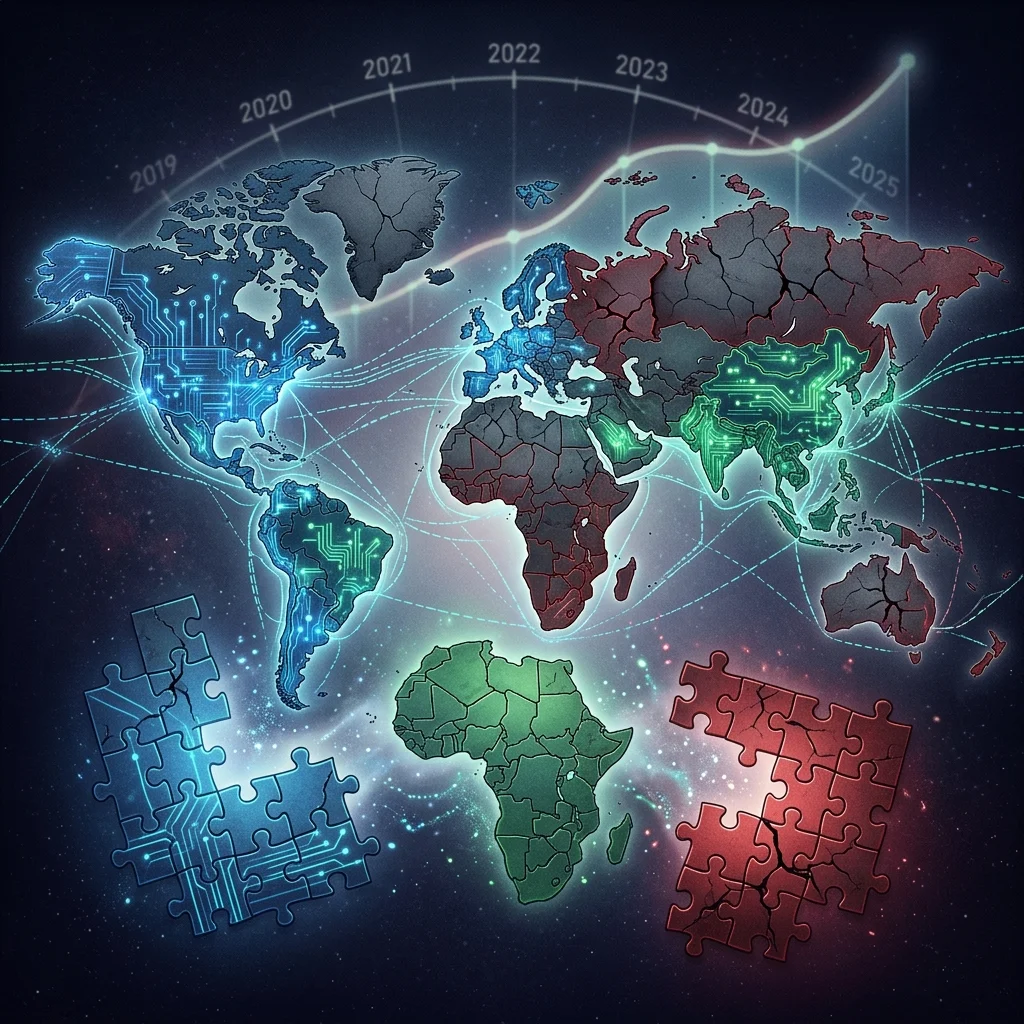
Resilience vs. Fragmentation: The New Geopolitics of Global Trade in a Post-Pandemic World
Introduction: The Post-Pandemic Trade Paradox
When the COVID-19 pandemic swept across the globe in early 2020, it did more than disrupt supply chains—it shattered the foundational assumptions that had governed international trade for three decades. Factories in China’s manufacturing heartlands idled, container ships queued for weeks off the coast of California, and governments rushed to ban exports of medical supplies. Yet even as the old system cracked, a new one began to emerge from the rubble. E-commerce platforms recorded double-digit revenue jumps, regional trade agreements accelerated their ratification timelines, and policymakers in capitals from Tokyo to Nairobi started rethinking what “trade security” actually means.
This is the paradox of post-pandemic trade: the very efforts to build resilience against future shocks are simultaneously accelerating the fragmentation of global commerce into competing regional blocs. The shift from efficiency-driven globalization to resilience-driven regionalization is not a simple pivot. It is a geopolitical realignment with deep vulnerabilities—one where technology, policy, and national security interests collide. This article argues that the post-pandemic order will be defined by three interconnected dynamics: the rise of regional trade blocs as strategic hedges against US-China tensions, the double-edged sword of digital trade that both connects and divides economies, and the urgent need for inclusive policies to prevent a two-speed global economy where large corporations and wealthy nations thrive while smaller players fall behind. [IMAGE: A split image: left side shows congested ports and factory shutdowns (2020), right side shows glowing digital interfaces and regional trade agreement logos (RCEP, AfCFTA) overlaid on a map.]
---
Section 1: The Great Disruption and Its Immediate Aftermath
The pandemic delivered a stress test that global supply chains were never designed to pass. In February 2020, China’s manufacturing centers saw a 13.5% production drop at the pandemic’s peak (BBC News), while the Port of Los Angeles experienced a 25% increase in ship waiting times (Los Angeles Times) as cargo piled up and workers fell ill. The ripple effects were immediate: automakers in Germany halted production due to missing Chinese components, pharmaceutical companies faced shortages of active ingredients sourced from a single Indian factory, and ventilator manufacturers scrambled to retool production lines.
The macroeconomic data paints a stark picture. Global trade volumes fell 5.3% in 2020 (WTO), the sharpest contraction since the global financial crisis. More tellingly, over 93 countries imposed trade-restrictive measures (Global Trade Alert), ranging from export bans on medical goods to new tariffs and non-tariff barriers. This sudden surge in protectionism signaled a sharp pivot away from the open-market principles that had underpinned the post-Cold War trading system. [IMAGE: Infographic showing the drop in global trade volumes (line chart) and the rise in restrictive measures (bar chart) side by side, with source logos (WTO, Global Trade Alert).]
The economic logic driving these decisions was straightforward: single-location dependencies created systemic risk. For decades, companies optimized for cost, concentrating production of critical components—semiconductors in Taiwan, rare earths in China, automotive parts in Mexico—in a handful of locations. When the pandemic hit, those nodes became choke points. The immediate response was to safeguard domestic supply chains through stockpiling, reshoring, and friend-shoring. But this defensive posture, while rational in the short term, sowed the seeds of a longer-term fragmentation that is now reshaping global trade dynamics.
---
Section 2: The Rise of Regional Blocs — Strategic Autonomy in Action
If the pandemic’s first lesson was about fragility, its second lesson was about the power of proximity. As global supply chains untangled, regional trade agreements gained unprecedented momentum. Two mega-bloc agreements stand out: the Regional Comprehensive Economic Partnership (RCEP) and the African Continental Free Trade Area (AfCFTA).
RCEP, which entered into force in January 2022, brings together 15 Asia-Pacific nations including China, Japan, South Korea, Australia, and New Zealand. Covering approximately 30% of global GDP (Brookings Institution), it is the largest trade bloc in history. Its rules of origin allow businesses to cumulate inputs from any member country, effectively creating a unified production platform that reduces dependence on distant suppliers. For multinational corporations, RCEP offers a way to diversify supply chains within a trusted geographic zone—a kind of “Asia-first” strategy that hedges against both pandemic disruptions and US-China trade tensions.
Meanwhile, AfCFTA is projected to boost intra-African trade by 30–50% by 2040 (World Bank), as tariff reductions and harmonized standards lower barriers that have historically kept African economies trading more with Europe or China than with each other. The pandemic accelerated this push: African nations, hit hard by medical supply shortages, recognized the vulnerability of relying on imports for essential goods. AfCFTA negotiations on digital trade, investment, and intellectual property were fast-tracked to create a more self-reliant continental economy. [IMAGE: Map of the world with RCEP countries shaded in blue, AfCFTA countries in green, and USMCA countries in orange, with arrows showing increased intra-bloc trade flows and reduced cross-bloc flows.]
These regional blocs are not merely economic arrangements—they are geopolitical instruments. For China, RCEP strengthens its role as the manufacturing engine of Asia while diluting US influence. For the African Union, AfCFTA provides a platform to negotiate collectively with larger trading partners. For the United States, the Indo-Pacific Economic Framework (IPEF) and the Americas Partnership represent attempts to build alternative supply networks outside Chinese-dominated value chains. The result is a world where trade is increasingly organized along regional lines, with strategic autonomy replacing pure efficiency as the guiding principle of trade policy.
---
Section 3: Digital Trade — The Double-Edged Sword
Even as physical supply chains struggled, digital trade exploded. E-commerce’s share of global retail jumped from 14% in 2019 to 17% in 2020 (UNCTAD), with platforms like Amazon reporting 27% revenue growth in 2020 alone. Small businesses that had never sold online suddenly had no choice but to digitize or perish. Cross-border data flows, digital payments, and cloud-based logistics became the new infrastructure of global commerce.
Digital trade is often celebrated as a great equalizer—a way for small enterprises in developing countries to reach global markets without building physical distribution networks. And indeed, platforms like Alibaba’s eWTP and Shopify enabled thousands of artisans and manufacturers from Vietnam to Kenya to sell directly to consumers in Europe and North America. But the reality is more complex. The benefits of digital trade have been highly uneven. Large corporations with sophisticated logistics and data analytics captured the lion’s share of growth, while smaller players struggled with digital literacy, payment barriers, and the logistics of last-mile delivery. In sub-Saharan Africa, for example, cross-border e-commerce remains hampered by fragmented payment systems and high internet costs. [IMAGE: A simple diagram showing two digital trade flows: one thick arrow from large corporations to global consumers with “high volume, low friction” label, and one thin, dashed arrow from small enterprises with “barriers: payment, logistics, digital skills” annotation.]
Furthermore, digital trade carries hidden vulnerabilities. The same data cables that enable seamless transactions also create new choke points. A single undersea cable cut near Egypt in 2020 disrupted internet connectivity across East Africa for weeks. Cyberattacks on logistics providers have the potential to halt port operations. And the growing reliance on a handful of cloud providers—Amazon Web Services, Microsoft Azure, Google Cloud—means that a technical failure or geopolitical conflict affecting one company could cascade across entire economies. The digital trade surge, therefore, is both a lifeline and a source of fragility.
---
Section 4: Vulnerable Nodes and the New Equilibrium
Beneath the macro trends of regionalization and digitalization lie specific vulnerable nodes that will determine whether the post-pandemic trading system becomes more resilient or more fragmented.
Logistics bottlenecks remain a persistent challenge. Even as port congestion eased after 2022, labor shortages, aging infrastructure, and the concentration of shipping routes through narrow straits (Malacca, Suez, Panama) create systemic risk. The 2021 Suez Canal blockage, which held up $9.6 billion in trade per day, was a reminder of how a single disruption can ripple through global supply chains. Reshoring and regionalization offer partial relief, but they cannot eliminate the need for long-distance shipping of commodities and specialized components.
Digital inequality is another critical node. According to the International Telecommunication Union, 2.7 billion people—mostly in low-income countries—still lack internet access. Without connectivity, the promise of digital trade remains out of reach. Meanwhile, digital trade regulations are increasingly fragmented: the European Union’s Digital Services Act, China’s data localization requirements, and India’s restrictions on cross-border data flows create a patchwork of rules that penalizes small businesses unable to comply with multiple regimes.
Small and medium-sized enterprises (SMEs) are the overlooked actors in the new equilibrium. While large multinationals have the resources to diversify supply chains, invest in digital tools, and navigate trade barriers, SMEs often lack these capabilities. Yet SMEs account for over 90% of businesses globally and 60–70% of employment. Their exclusion from the benefits of resilience-building and digital trade risks creating a two-speed economy: large, agile corporations operating across regions, and small, vulnerable enterprises trapped in local markets.
[IMAGE: A network diagram with large circles representing major trade hubs (China, US, EU) and smaller circles representing developing economies. Some small circles are connected to the large hubs by thin, broken lines labeled “logistics gaps” and “digital barriers,” while others have thicker, direct connections.]
---
Conclusion: Navigate the New Terrain
The post-pandemic global trade landscape is not a return to the old system, nor is it a simple shift from globalization to regionalization. It is a complex, multi-speed terrain where resilience and fragmentation coexist. The rise of regional trade blocs like RCEP and AfCFTA provides a buffer against geopolitical shocks and supply chain disruptions, but it risks carving the world into competing spheres of influence. The digital trade boom offers unprecedented opportunities for connection and efficiency, but it also amplifies inequalities and introduces new vulnerabilities.
For policymakers, the path forward requires balancing strategic autonomy with inclusive growth. Trade policy must go beyond tariff reductions and rules of origin to address the digital divide, build resilient logistics infrastructure, and provide targeted support for SMEs. For businesses, the imperative is clear: diversification is no longer optional, but it must be pursued with an eye toward the uneven playing field that digitalization creates.
The pandemic exposed the fragile foundations of hyper-globalization. The challenge now is to build a more resilient system without tearing apart the connectivity that has lifted billions out of poverty. Whether the future is one of cooperative resilience or competitive fragmentation depends on decisions made today—in trade negotiations, technology investments, and the often-overlooked spaces where small enterprises and local communities interact with the global economy. [IMAGE: A world map with multiple colored regions overlapping but with gaps between them, with glowing digital nodes at some intersections, symbolizing both connection and division.]